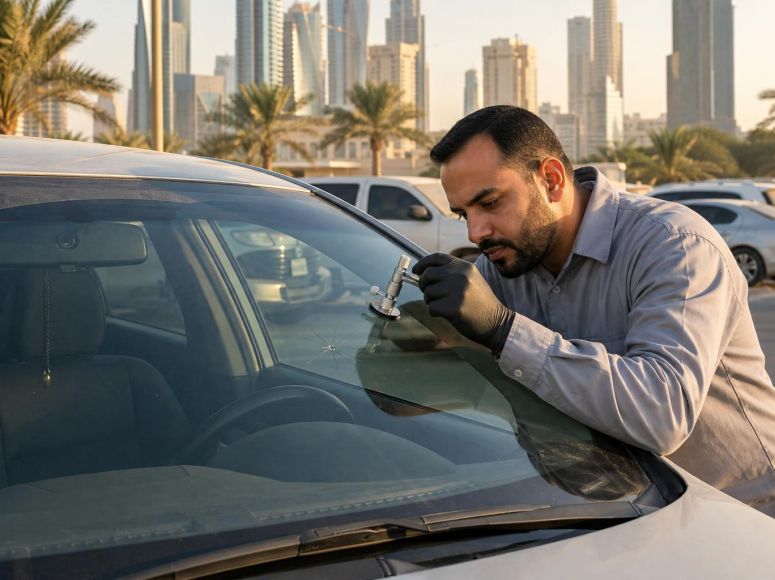
A windscreen is more than a piece of glass. It is a major visibility and safety component, and on many newer vehicles it is also the mounting surface for cameras and sensors used by driver-assistance systems. In Egypt and across the GCC, windscreens face particularly harsh conditions: loose gravel on roads, long highway journeys, airborne sand, intense sun, frequent air-conditioning use and large temperature changes between the cabin and the outside air.
A small stone chip can sometimes be repaired quickly and affordably. But delaying the decision can turn a repairable blemish into a spreading crack that requires a complete replacement. Knowing what to inspect, what to avoid and when to use a qualified glass specialist can save money without compromising safety.
Why windscreens suffer in Middle Eastern and North African conditions
Stone impact is the most obvious cause of windscreen damage, especially on motorways, construction-adjacent roads and routes used by heavy vehicles. Yet impact is only part of the story. A damaged windscreen is more likely to worsen when it is exposed to repeated heat and temperature stress.
- High cabin temperatures: A parked vehicle can become extremely hot, placing additional stress on glass that already has a chip or edge crack.
- Strong air conditioning: Directing very cold air at a sun-heated windscreen can create a rapid temperature difference. It may not damage healthy glass, but it can encourage an existing crack to grow.
- Sand and dust: Fine abrasive dust gradually pits the outer surface, particularly after frequent dry wiping or worn wiper blades.
- Road debris: Trucks, unpaved shoulders, roadworks and loose aggregate can throw stones at the glass.
- Body flex on rough roads: Potholes, speed humps and uneven surfaces can cause a crack to extend, especially if it has reached the edge of the windscreen.
These factors are relevant in desert and Gulf environments, but they also affect drivers in cities such as Cairo, Alexandria, Amman, Casablanca and Tunis, where construction debris, variable road surfaces and seasonal dust can be common.
First, identify the type of windscreen damage
Take a close look at the damage in good light. Do not run a fingernail aggressively across a crack, and avoid pressing on the glass.
Small chip
A chip is usually a small impact mark, sometimes with a tiny central point and short legs around it. It may be circular, star-shaped or resemble a bullseye. Many small chips can be repaired if treated early.
Short crack
A crack is a line in the glass. Even a short crack can spread unexpectedly due to heat, vibration or a pothole. It should be assessed promptly rather than simply monitored.
Edge crack
Damage that begins near the windscreen edge deserves extra caution. The edges are structural stress areas, and cracks originating there tend to spread more readily. Replacement is often more likely than repair, depending on the glass specialist's assessment.
Surface pitting and sand abrasion
Sand pitting often appears as widespread tiny marks that cause glare when facing low sun or oncoming headlights. It may not look dramatic from outside, but it can noticeably reduce visibility. A heavily pitted windscreen may need replacement even if there is no single major crack.
When a repair may be suitable
Professional resin repair is commonly considered for a small, recent chip when the damage is away from the driver’s critical viewing area and has not developed into a long crack. The aim is to stabilise the glass and reduce the visibility of the impact mark; it does not always make the chip disappear completely.
A glass specialist will usually consider:
- The size, shape and depth of the damage.
- Whether dirt, water or cleaning chemicals have entered the chip.
- Whether the damage is in the driver’s primary line of sight.
- How close the damage is to the edge of the glass.
- Whether the windscreen has heating elements, an acoustic layer, a head-up display area or camera-related components.
Do not rely only on a simple size rule. Repair limits vary by damage type, glass construction and the repair provider’s equipment. A qualified specialist should inspect the windscreen before promising that a repair is appropriate.
When replacement is the safer choice
Replacement should be seriously considered when a crack is spreading, when damage is in the driver’s direct field of vision, or when the glass has extensive pitting that creates glare. It is also often the sensible option if the inner glass layer appears damaged, the crack reaches an edge, or the vehicle manufacturer’s repair guidance does not permit repair in that location.
Do not ignore these warning signs:
- The crack becomes longer after the car has been parked in the sun or driven over a rough surface.
- There are multiple impact points or branching cracks.
- The glass looks distorted when viewed through from the driver’s seat.
- Night driving produces excessive halos or scatter around lights.
- The damage sits where a forward-facing camera, rain sensor or other windscreen-mounted equipment operates.
If visibility is impaired, avoid unnecessary driving until the windscreen has been assessed. Regulations and vehicle-inspection requirements differ by country, so drivers in Egypt, Saudi Arabia, the UAE and other markets should also check applicable local requirements and their insurer’s terms.
What to do immediately after a stone chip
- Keep the chip clean and dry. Moisture and dust can contaminate the damaged area, reducing the quality of a later resin repair.
- Cover it temporarily. If the glass is dry, a purpose-made windscreen repair film can help keep contaminants out. Avoid sticking strong tape directly over a hot or dirty windscreen, as it can leave residue.
- Do not wash the vehicle with high-pressure water around the chip. Water pressure can force contamination into the damaged area.
- Reduce temperature shock. On a hot day, ventilate the cabin briefly before setting the air conditioning to a very low temperature. Avoid blasting cold air directly at the damaged section of glass.
- Book an inspection soon. A prompt assessment gives the best chance of a straightforward repair.
Windscreen replacement on modern cars: the calibration question
Many current vehicles have a camera mounted behind the windscreen. Depending on the model, it may support features such as lane-departure warnings, lane-centering assistance, automatic emergency braking or traffic-sign recognition. The windscreen may also carry a rain sensor, humidity sensor, antenna elements or a head-up display-compatible layer.
When replacing glass on a vehicle with these systems, ask the workshop:
- Is the replacement glass specified for my exact vehicle version and equipment?
- Will any camera or sensor calibration be required after fitting?
- Can the workshop carry out the calibration, or will it be arranged with a suitably equipped facility?
- Will the adhesive curing time be explained before I collect the vehicle?
- Will they check for wind noise, water leaks and warning messages after installation?
Using the wrong glass specification or skipping required calibration can affect the performance of driver-assistance features. A replacement should never be selected on price alone when the vehicle has windscreen-mounted technology.
How to reduce sand damage and glare
You cannot prevent every stone strike, but daily habits can slow down windscreen wear.
- Never operate dry, dusty wipers. Use washer fluid first. Dry wiping drags abrasive dust across the glass.
- Replace worn wiper blades promptly. Torn, hardened or chattering blades can scratch the windscreen and smear dust across your view.
- Use washer fluid suitable for the climate. Plain water can leave mineral deposits and may not clean oily road film effectively. Check the vehicle handbook and use a product compatible with the washer system.
- Keep distance from trucks and vehicles on loose shoulders. This is one of the most practical ways to reduce stone impacts, particularly at highway speed.
- Park under shade where practical. A shaded space or quality sunshade reduces cabin heat and helps protect interior materials as well as reducing temperature stress on damaged glass.
- Clean the inside of the glass too. Interior haze can make glare worse, particularly during night driving and when the sun is low.
Repair, replacement and insurance: practical checks
Windscreen cover, excess amounts, approved repair networks and claims procedures vary widely among policies and countries. Before authorising work, read your policy or contact your insurer. Ask whether windscreen repair is treated differently from full replacement, whether you must use an approved provider, and whether calibration-related work is included for a vehicle equipped with cameras.
If you are paying privately, get a written quote that identifies the glass specification, mouldings or clips required, sensor transfer or replacement if applicable, calibration work and warranty terms. This makes it easier to compare like-for-like quotations.
Conclusion
For drivers in Egypt and the GCC, a windscreen chip should be treated as a timely repair decision, not merely a cosmetic issue. Heat, air conditioning, dust and rough roads can turn minor damage into a larger safety and visibility problem. Keep a new chip clean, avoid severe temperature shock, have it inspected quickly and choose a replacement provider that understands your vehicle’s glass and driver-assistance equipment. Clear vision is one of the simplest and most important parts of safe driving.