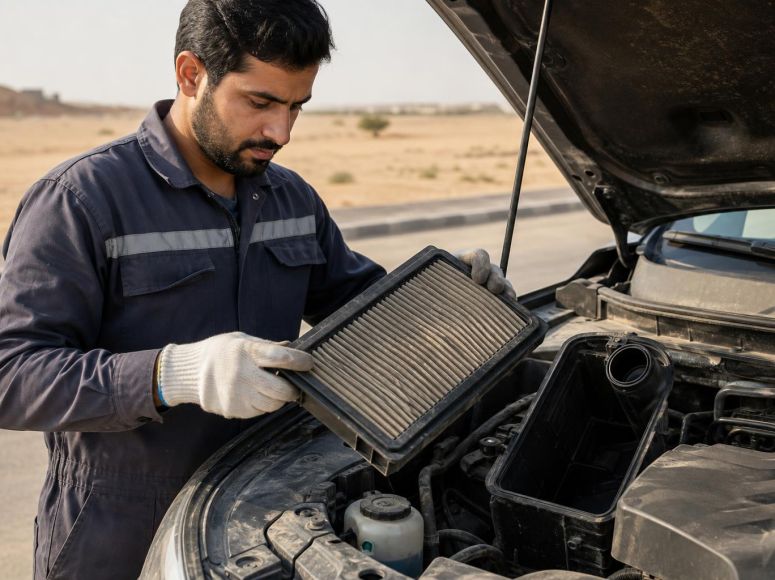
In Egypt and the GCC, an engine air filter often works in harsher conditions than the service schedule suggests. Fine dust from unpaved shoulders, construction zones, desert trips and seasonal sand-laden winds can gradually restrict airflow or expose a weakness in the intake system. The result may be reduced performance, higher fuel use, warning lights or accelerated wear if contaminated air gets past the filter.
The engine air filter is not the same as the cabin filter. A cabin filter protects the air you breathe inside the car; the engine air filter protects the engine’s intake system. It is a relatively inexpensive service item, but it must be selected, fitted and inspected correctly.
Why MENA driving is demanding on engine air filters
All cars draw a large volume of outside air into the engine. That air is filtered before it reaches sensitive components such as the airflow sensor, turbocharger on turbocharged vehicles, throttle body and engine cylinders.
On a clean paved route, a filter can usually follow the manufacturer’s normal maintenance interval. But an interval is not a promise that applies equally to every driver. Conditions common in Egypt, Saudi Arabia, the UAE, Kuwait, Qatar, Bahrain and Oman can make earlier inspection sensible:
- Frequent driving through dusty construction areas or on unpaved streets.
- Regular desert driving, camping trips or travel on gravel tracks.
- Parking or queuing beside sandy road shoulders.
- Following trucks or other vehicles on dusty roads.
- Seasonal dust or sandstorms.
- Taxi, delivery and ride-hailing use with long daily operating hours.
Fine dust is especially important because it can settle deep in the filter media. A filter can look only moderately dirty on the surface yet have meaningful airflow restriction, while a poorly seated filter can allow dust to bypass it entirely.
Follow the service schedule, but inspect for your actual conditions
Start with the interval in your owner’s manual or maintenance booklet. Some manufacturers list a normal and a severe-use schedule; if yours does, use the one that genuinely matches your driving. If it does not, ask for an inspection at each routine service and replace the filter when its condition warrants it.
There is no universal mileage or time limit that suits every car in the region. Replacing a filter too late can restrict airflow; replacing it solely because it looks slightly discoloured can be wasteful. The practical approach is to combine the manufacturer’s guidance with a condition check and an honest assessment of where the car is driven.
After a particularly dusty off-road trip or a severe dust event, it is reasonable to inspect the airbox and filter earlier than planned. This does not automatically mean the filter must be replaced, but it gives you a chance to identify heavy loading, a damaged seal or loose intake ducting.
Signs your engine air filter or intake needs attention
A dirty filter alone does not always create obvious symptoms, particularly on modern cars whose engine management systems compensate for small changes. Still, the following signs justify an inspection:
- Sluggish acceleration: the car feels less responsive than usual, especially under load or when overtaking.
- Higher fuel consumption: only after ruling out tyre pressure, traffic patterns, driving style and air-conditioning use.
- Rough idle or hesitation: this can have many causes, but intake restriction, a leak or a contaminated airflow sensor are possibilities.
- Check-engine light: have the fault codes read rather than assuming the filter is the cause.
- Whistling, hissing or unusual intake noise: this may indicate a split hose, loose clamp or improperly fitted airbox lid.
- Visible dust inside the clean side of the airbox: this is not normal and needs prompt attention.
Do not diagnose an engine problem from symptoms alone. Ignition, fuel, turbo, sensor and vacuum faults can feel similar. A qualified workshop should inspect the entire intake path and scan the vehicle if a warning light is present.
How to inspect the filter safely
Many vehicles make the filter accessible, but some airboxes are awkwardly positioned and certain designs require removal of sensors, ducts or covers. If you are not certain of the procedure, let a workshop handle it. Incorrect reassembly can cause an air leak or damage a sensor connector.
- Park on level ground, switch off the engine and allow hot components to cool.
- Use the owner’s manual to identify the engine airbox. Do not confuse it with the cabin-filter housing.
- Before opening it, wipe loose dust from around the airbox cover so debris does not fall inside.
- Release the clips or fasteners carefully. Avoid pulling on wiring, hoses or sensor connectors.
- Lift out the filter and inspect both the pleats and its rubber or foam sealing edge. Look for heavy dust loading, torn media, crushed pleats, oil contamination or a distorted seal.
- Inspect the inside of the airbox, lid and intake duct for sand, cracks, loose clamps or evidence that dust has passed the filter.
- Install the correct replacement filter if needed, ensuring it sits squarely in its locating channel. Refit the cover evenly and confirm every clip or fastener is secure.
A light layer of dust on the dirty side is expected. What matters more is whether the filter media is heavily loaded, damaged or unable to seal. If you see dust downstream of the filter, do not simply fit a new element and move on: find out why the seal or airbox failed.
Should you clean and reuse a paper air filter?
For most standard disposable paper filters, replacement is safer than cleaning. Tapping the filter against a hard surface can crack the media or disturb the seal. Compressed air can create holes, force dirt deeper into the material or damage delicate pleats, even if the filter looks cleaner afterwards.
Some performance filters are specifically designed to be washed and re-oiled. Only clean these if the manufacturer states that they are reusable, and follow its exact cleaning and oiling instructions. Over-oiling may contaminate certain airflow sensors; under-oiling can reduce filtration. A reusable filter is not automatically a better choice for extremely dusty use, so consider filtration quality and maintenance discipline rather than marketing claims.
Choose the correct replacement, not just the cheapest one
The filter must match the vehicle’s engine, airbox and model-year specification. A filter that is nearly the right size may leave a gap around the sealing edge. In dusty climates, that small gap can matter more than the difference between brands.
When buying a replacement:
- Use the VIN, owner’s manual or the old filter part number to confirm fitment.
- Buy from a trusted dealer, parts retailer or workshop to reduce the risk of counterfeit or poor-quality parts.
- Check that the filter’s frame is not warped and the sealing gasket is intact.
- Do not force the filter into the housing or trim its edge to make it fit.
- Keep the packaging or invoice, especially if the vehicle is under warranty or you maintain a service history for resale.
For vehicles still covered by a manufacturer or dealer warranty, check the applicable service requirements before changing parts yourself. Requirements can vary by brand, country and service plan.
Do not overlook the rest of the intake system
A new filter cannot protect the engine if the surrounding parts are compromised. At every filter inspection, look at the full path from the air intake snorkel to the engine:
- Airbox cover and clips: the cover must close evenly and firmly.
- Intake hoses: inspect rubber ducts and plastic pipes for splits, loose joints and abrasion.
- Clamps: ensure they are present and tight without crushing the hose.
- Airflow or pressure sensors: never spray cleaners on these components unless the product is specifically intended for that sensor and you know the correct procedure.
- Water drains and intake location: after heavy rain or deep-water exposure, have the system checked if the engine ran roughly or the filter is damp.
A damp, swollen or muddy engine air filter should be treated seriously. Do not start or restart an engine that may have drawn in water; arrange professional assessment, as water ingestion can cause severe internal damage.
Desert driving: a short after-trip checklist
After driving on sand, gravel or very dusty tracks, inspect the car before returning to normal service:
- Remove loose dust around the grille, air intake openings and airbox exterior.
- Check the engine air filter and its sealing edge.
- Confirm the airbox lid, ducts and clamps are secure.
- Inspect the radiator and air-conditioning condenser for heavy debris buildup; clean them carefully using an appropriate method.
- Check tyres for cuts, embedded stones and correct pressure according to the vehicle’s intended road use.
- Listen for intake leaks or unusual engine noises on the next drive.
For vehicles used often in desert environments, discuss a more frequent inspection plan with a workshop familiar with the vehicle. Avoid improvised modifications to the intake unless they are engineered for the model and fitted professionally.
A simple ownership routine that prevents expensive problems
Make the engine air filter part of your regular ownership record. Note the date, odometer reading, part fitted and driving conditions at each replacement. This helps you identify whether your real-world use needs earlier inspections than the standard schedule.
If a workshop recommends replacement, ask to see the removed filter and the airbox. A good inspection should include the condition of the filter, its seal and the clean side of the housing—not just a quick glance at the visible surface.
Conclusion
Egyptian and Gulf drivers do not need to replace an engine air filter at arbitrary intervals, but dust-heavy conditions deserve more attention than a routine oil-change checklist may provide. Follow the manufacturer’s maintenance guidance, inspect earlier after unusually dusty use, fit the correct quality part and make sure the airbox seals properly. That modest effort helps protect engine performance, fuel efficiency and long-term reliability in demanding MENA conditions.