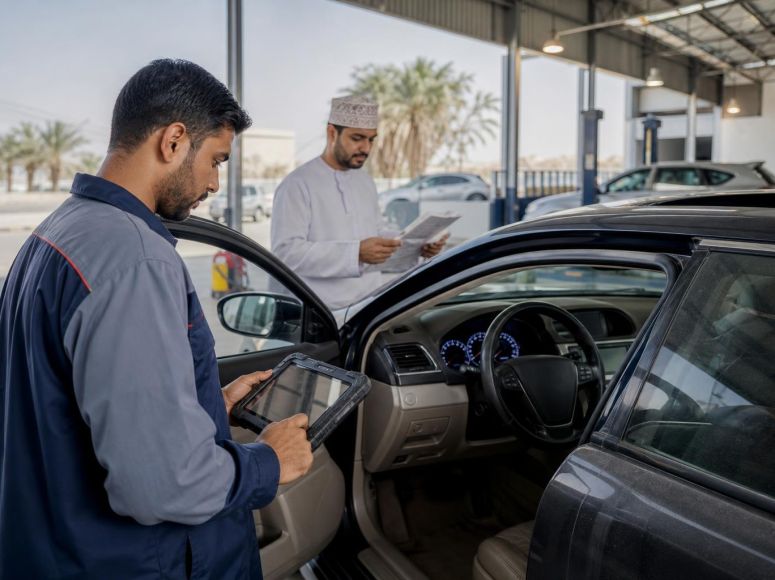
Odometer reading is one of the first numbers a used-car buyer sees, but it should never be the only measure of a car’s condition or value. In Egypt and the Gulf, a vehicle may have spent years in intense heat, stop-start city traffic, long intercity journeys or, in some cases, overseas ownership before import. A low number on the dashboard can be genuine—but it can also be incomplete, misleading or inconsistent with the car’s real wear.
The aim is not to prove a precise lifetime distance from one clue. It is to build a credible mileage story from the vehicle, its documents and an independent inspection. If that story does not add up, pause before paying a deposit.
Why mileage matters, but does not tell the whole story
Mileage affects resale value, maintenance planning and expected wear on components such as suspension bushes, wheel bearings, engine mounts, brake parts and interior controls. It can also help a buyer judge whether major services are likely to be due.
However, distance alone does not define a used car. A properly maintained car with higher mileage may be a better purchase than a neglected low-mileage example. In hot Gulf climates, for example, long periods parked outdoors can age tyres, batteries, seals, paint and interior trim even when the odometer barely moves. Conversely, a regularly serviced highway car may show higher mileage with relatively modest mechanical wear.
Think of mileage as a claim to verify, not a guarantee of condition.
Start with the dashboard, but inspect it critically
Before starting the engine, photograph the odometer and note whether the display is analogue, digital or a mixed instrument cluster. Check that the reading makes sense alongside the vehicle’s apparent age and advertised history.
Look for physical clues that do not match the reading
- Steering wheel: Heavy smoothing, peeling, loose leather or a shiny worn rim can indicate substantial use. Replacement is possible, so this is a clue rather than proof.
- Pedals: Worn rubber pads, polished pedal faces or unusually new pads on an otherwise tired cabin deserve a question.
- Driver’s seat: Check the outer bolster, seat base, adjustment controls and belt buckle for sagging, tears or excessive looseness.
- Gear selector and switches: Faded markings, worn buttons and loose window switches can reveal frequent use.
- Door handles and keys: Worn key blades, heavily polished handles and a tired driver’s door hinge can support a high-use history.
None of these signs can independently confirm odometer alteration. A careful owner may have renewed worn trim, while a car used mainly on open roads may have less cabin wear than expected. What matters is whether several indicators point in the same direction.
Ask for a timeline, not just a service book
A seller should be able to explain where the car has been serviced and when key work was done. Request invoices, dealer workshop records, inspection reports and parts receipts where available. The most useful evidence shows a sequence of dates, mileage readings and repair descriptions.
Build a simple timeline with the following details:
- First registration date and country of prior use.
- Each recorded service date and odometer figure.
- Tyre replacement, battery replacement and brake-work invoices.
- Inspection or testing records that list the odometer reading.
- Major repair invoices, including transmission, cooling-system or engine work.
The mileage should rise logically over time. Small variations can occur when a figure is written down incorrectly, but a later record showing significantly lower distance than an earlier one is a serious warning. Ask for an explanation and supporting evidence; do not accept a vague answer.
Be careful with incomplete books and duplicate stamps
A stamped service book is useful only if it is credible. Look for entries that progress in date and mileage, workshop contact details, and invoices that support major services. Identical handwriting, stamps without matching invoices, missing years or an unexplained change in mileage pattern should prompt further checks.
Digital service histories can be valuable too. Where a franchised dealer or reputable workshop can verify records using the vehicle identification number (VIN), ask the seller to arrange this or accompany you. Access and record detail vary by brand, country and privacy policy, so do not assume every dealer can disclose a complete history to a prospective buyer.
Use the VIN to understand the car’s background
Match the VIN shown on the registration documents with the VIN plate, windscreen area where fitted, and other manufacturer-marked locations. The locations differ by model, so a qualified inspector can help. Signs of disturbed rivets, damaged labels, fresh paint around a VIN area or mismatched documents require immediate professional attention.
The VIN can also help establish whether the vehicle is a locally supplied car or an import. This matters because imported vehicles may have repair, title or mileage history in another country that is not obvious from local paperwork. A vehicle-history report may provide useful leads for some imported cars, but coverage varies greatly by country, insurer, auction source and database. Treat a clean report as one piece of evidence—not proof that no previous damage or mileage issue exists.
For cars that have changed countries, ask specifically for import documents and any pre-import inspection or auction material the seller holds. Compare photographs, listed condition and recorded mileage with the vehicle in front of you.
Get an independent diagnostic scan
A professional pre-purchase inspection should include a diagnostic scan appropriate to the vehicle. On many modern cars, mileage-related information may be stored or reflected in more than one electronic control unit, such as the instrument cluster, engine control module, transmission module or service system.
But a scan is not a magic odometer test. Module access differs by manufacturer, some values may not be available, and a mismatch does not automatically identify the cause. Modules can be replaced after legitimate repairs, coding may be required, and some readings record engine hours or event counts rather than kilometres.
Ask the inspector to explain in plain language:
- Which modules were scanned.
- Whether their information is consistent with the dashboard reading.
- Whether any module replacement or communication fault is evident.
- Whether fault codes, service counters or operating hours raise questions.
- What cannot be verified on that specific model.
Do not rely on a cheap generic code reader alone. It may only access basic engine faults and miss manufacturer-specific systems.
Use engine hours as a reasonableness check
Where engine operating hours are available, they can provide context. Divide the displayed distance by engine hours to estimate an average speed. An unusually high or low result is not proof of tampering, because driving patterns vary widely: congested city use lowers the average, while long motorway travel raises it.
Still, it is a useful question for a specialist to consider alongside the claimed mileage. A car presented as lightly used but showing signs of extensive idling, heavy urban duty or multiple inconsistent electronic records needs closer investigation.
Check wear items and maintenance timing
Workshop evidence often exposes an implausible mileage claim. Compare the car’s condition with maintenance that would normally be expected at various stages of ownership, while following the specific manufacturer schedule rather than generic intervals.
Items worth reviewing include:
- Tyre date codes and invoices, while remembering tyres may be replaced early because of heat, punctures or wear.
- Brake disc and pad condition.
- Suspension leaks, worn bushes, noisy bearings and uneven tyre wear.
- Condition of cooling hoses, radiator, drive belts and engine mounts.
- Air-conditioning performance and evidence of compressor, condenser or cabin-filter work.
- Whether transmission, spark plug, coolant or timing-belt services are documented when applicable.
In the Gulf and Egypt, heat places particular importance on cooling-system health and air-conditioning performance. These checks are important regardless of odometer reading, and they may reveal neglected maintenance that a low mileage figure hides.
Recognise the seller behaviours that require caution
Be more careful when a seller refuses an independent inspection, will not share the VIN before a visit, pressures you to pay quickly, or dismisses clear inconsistencies as unimportant. Other warning signs include:
- “Original mileage” claimed with no records at all.
- A recently replaced instrument cluster with no invoice or explanation.
- Service records that stop well before the current sale date.
- A freshly detailed interior that prevents close inspection until after a deposit is paid.
- A price far below comparable examples without a clear reason.
- A seller who will only allow a brief test drive or refuses a cold start.
A legitimate seller should welcome a sensible, non-destructive inspection. Walking away from an unclear car is usually cheaper than solving its history after purchase.
A practical used-car mileage verification checklist
- Record the advertised mileage, VIN, model year and asking price.
- Inspect cabin wear, pedals, controls, keys and driver’s seat before the test drive.
- Request all available service invoices and make a date-and-mileage timeline.
- Match the VIN across documents and vehicle identifiers.
- Ask whether the car was imported, and request relevant import or prior-history documents.
- Book an independent pre-purchase inspection with a proper diagnostic scan.
- Compare the inspection findings with the claimed distance and service schedule.
- Price the car according to verified condition and history, not dashboard mileage alone.
- Walk away if the evidence conflicts and the seller cannot document a credible explanation.
Conclusion
The best used-car purchase is not necessarily the one with the lowest displayed mileage. It is the one with a consistent, documented history, sound mechanical condition and a seller willing to let the evidence be checked. For buyers in Egypt, Saudi Arabia, the UAE, Kuwait, Qatar, Bahrain and Oman, this approach is especially valuable because local use, import histories and harsh climate exposure can make a simple dashboard number an incomplete picture. Verify the story before you negotiate—and let an independent inspection guide the final decision.