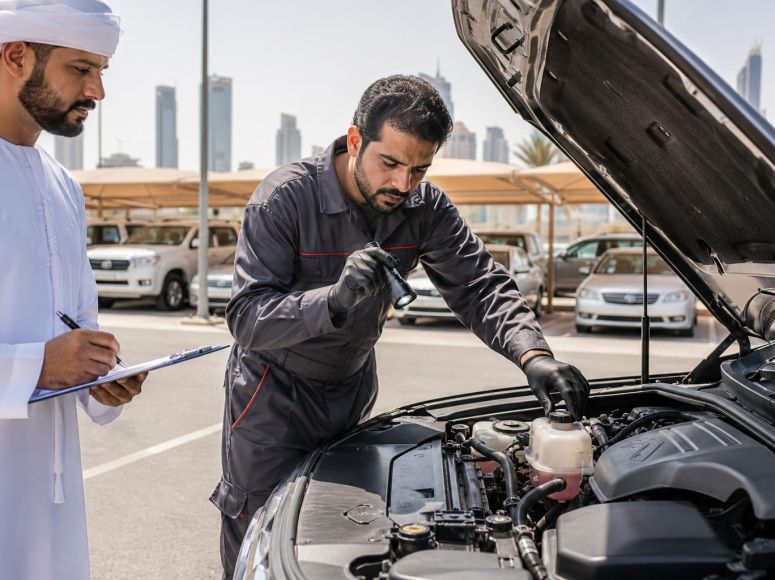
In the Gulf, a used car’s cooling system deserves the same attention as its engine and transmission. High ambient temperatures, heavy air-conditioning use, stop-start traffic and long motorway journeys can reveal weaknesses that may stay hidden during a short drive in mild weather. A car that overheats, loses coolant or cannot keep its cabin cool can quickly become expensive to repair.
This guide is intended for used-car buyers in Saudi Arabia, the UAE, Kuwait, Qatar, Bahrain and Oman. It does not replace a workshop inspection, but it helps you identify warning signs, ask better questions and decide when to walk away.
Why cooling-system checks matter more in Gulf used cars
An engine produces substantial heat on every journey. The radiator, coolant, water pump, thermostat, cooling fans, hoses and pressure cap work together to carry that heat away. In Gulf summer conditions, the system has less margin for error: hot outside air makes it harder for the radiator and air-conditioning condenser to shed heat.
A neglected cooling system may lead to coolant leaks, repeated overheating, damaged hoses, a failed radiator or, in severe cases, cylinder-head and engine damage. Air-conditioning performance is also closely connected to the vehicle’s ability to manage heat, although the AC refrigerant circuit is separate from the engine coolant circuit.
Start before the engine is running
Arrange to see the car when the engine is fully cold whenever possible. A seller who has already warmed the car may have a perfectly innocent reason, but a cold start lets you check coolant level, cold-start behaviour and how the temperature rises from the beginning.
Check the coolant reservoir
With the engine cold, locate the translucent coolant expansion tank. The level should normally sit between its minimum and maximum marks. Do not open a radiator cap or coolant reservoir cap on a hot engine; pressurised coolant can cause serious burns.
- Low coolant: It may indicate a leak, poor servicing or a previous overheating issue. Do not accept “it just needs topping up” without finding the reason.
- Very dirty coolant: Coolant should generally look clean and consistent in colour. Rust-coloured fluid, heavy sediment or oily contamination warrants a professional inspection.
- Unusual mixing: Different coolant colours do not reliably identify chemistry. What matters is that the fluid meets the vehicle manufacturer’s specification and has not been mixed carelessly.
- Fresh fluid in one area only: Recently cleaned surfaces around the tank, radiator or hoses can be routine detailing, but they can also hide dried coolant residue. Look closely around clamps and joints.
Never judge the condition of coolant by colour alone. A workshop can test coolant concentration and inspect the system properly.
Look for external leak evidence
Use a torch and inspect accessible areas around the radiator, coolant hoses, hose clamps, reservoir, thermostat housing and the front of the engine. Dried coolant can leave white, pink, green, blue or crusty residue, depending on the fluid used. Check the ground beneath the car for damp patches, but remember that clear water dripping under the front of a parked car may simply be normal air-conditioner condensation.
Also inspect the radiator and AC condenser through the front grille where possible. Dust, insects, plastic debris and bent fins can restrict airflow. Do not poke fins with tools; they bend easily.
Use the service history to ask targeted questions
Maintenance invoices are more useful than a verbal assurance that a car was “fully serviced.” Look for evidence of coolant replacement at the interval specified by the manufacturer, as well as repairs to the radiator, water pump, thermostat, fans or hoses.
A single replaced part is not automatically negative. Cooling-system components wear out. The important question is whether the repair has a clear explanation and whether repeated overheating, coolant loss or major engine work appears in the history.
Questions worth asking the seller
- Has the car ever overheated or shown a temperature warning?
- Has it needed coolant added between scheduled services?
- Which cooling-system parts have been replaced, and why?
- Has the radiator been repaired, flushed or replaced?
- Has the engine had head-gasket, cylinder-head or engine rebuild work?
- Does the air conditioning remain cold in slow traffic and while idling?
Compare answers with documents and the physical condition of the car. A seller who cannot answer every technical question is not necessarily dishonest, but vague explanations combined with visible signs of leaks should raise caution.
What to watch during the test drive
A brief drive around the block is not enough. If insurance, registration and the seller allow it, drive long enough for the engine to reach normal operating temperature. Include city-speed driving, several minutes of idling and, ideally, a higher-speed section.
Monitor the temperature indication
Many modern vehicles use a simplified temperature gauge that stays near the middle across a broad normal range. Others show a numerical temperature reading or provide only a warning lamp. Read the owner’s manual for the specific model if available.
- The gauge should rise steadily from cold and then settle at its normal position.
- A gauge that climbs unusually high in traffic, swings up and down, or triggers a warning needs investigation.
- Do not continue a test drive if an overheating warning appears, steam is visible or a strong sweet coolant smell fills the cabin.
Turn the air conditioning on during the test drive. In a healthy vehicle, the AC should cool the cabin effectively without causing the engine temperature to rise abnormally. Weak cooling at idle that improves at speed may point to several possible issues, including airflow or fan problems, and should be diagnosed rather than guessed at.
Listen for fans and look for warning signs
After the engine is warm, park safely and let it idle with the AC running. Electric cooling fans often cycle on and off, though their noise and behaviour differ by model. Listen for harsh bearing noises, repeated rattling or fans that appear not to operate when the engine is hot. Do not put hands, clothing or tools near the fan: it can start automatically even with the engine switched off on some vehicles.
Other warning signs include steam from the engine bay, a persistent coolant smell, gurgling sounds behind the dashboard, a heater that changes from hot to cold unpredictably, or a temperature warning that disappears after the car starts moving. These symptoms need a proper diagnosis.
Check the cabin heater as well as the air conditioning
It may feel odd to test the heater in hot weather, but it is useful. The cabin heater uses hot engine coolant, so inconsistent heat can sometimes reveal low coolant, air trapped in the system or circulation issues. Briefly select a warm setting after the engine has reached normal temperature, then return the AC to a comfortable setting.
This is only a screening check. Strong heater output does not prove the entire cooling system is healthy, and weak output can have more than one cause.
Inspect for signs of previous overheating
No single sign proves that a car has overheated in the past. However, several signs together justify a detailed pre-purchase inspection:
- Repeated coolant stains around the engine bay or undertray
- Hoses that are visibly swollen, brittle, cracked or excessively hard
- A radiator with extensive corrosion, damaged fins or poor-quality repairs
- Oil that looks milky or coolant with an oily film, although contamination must be professionally confirmed
- Fresh sealant around cooling-system joints without an invoice explaining the repair
- A cooling fan or radiator that has clearly been substituted with unsuitable parts
- Misfire, rough running, white exhaust vapour after the engine is fully warm, or unexplained pressure in the coolant system
These symptoms can have different causes. Avoid diagnosing a head-gasket failure from one clue or from an internet video. Instead, ask an independent workshop to perform appropriate tests, which may include a pressure test, cooling-fan check, scan for fault codes and, where justified, combustion-gas testing.
Do not confuse AC condensation with a coolant leak
In the Gulf, air-conditioning systems work hard and commonly produce a noticeable puddle of clear water beneath a parked vehicle. This is usually normal condensation draining from the evaporator, particularly after the AC has been running.
Coolant is different. It may feel slippery, carry a sweet or chemical smell and leave coloured or chalky residue when it dries. If you are unsure, do not touch an unknown fluid with bare hands. Ask a technician to identify it.
Why a pre-purchase inspection is essential
A visual check and test drive can reduce risk, but neither can verify the full condition of a cooling system. Before paying a deposit or completing a transfer, arrange an inspection with an independent, reputable workshop familiar with the vehicle’s make and model.
Ask the workshop to assess:
- Stored diagnostic trouble codes and live temperature data where available
- Coolant level, condition and evidence of leaks
- Radiator, condenser, hoses, clamps, water pump area and thermostat housing
- Cooling fan operation and airflow through the radiator stack
- AC performance at idle and under normal operating conditions
- Any evidence that overheating has affected the engine
If a seller refuses a reasonable independent inspection, treat that as an important buying signal. It may be wiser to move on than to inherit an unknown overheating problem.
A simple decision rule for buyers
A clean engine bay and cold AC are encouraging, but they are not proof of a healthy car. Buy with greater confidence when the used car has stable operating temperature, no unexplained coolant loss, documented maintenance and a satisfactory independent inspection.
Walk away, or negotiate only after a qualified diagnosis, if the car overheats, has active leaks, repeatedly needs coolant, produces steam, shows a temperature warning or has unclear evidence of major engine repairs. In extreme regional heat, a marginal cooling system rarely becomes less troublesome over time.
Conclusion
For used-car buyers across the Gulf, checking the cooling system is a practical way to avoid one of the most disruptive ownership problems. Inspect the car cold, review its records, test it at operating temperature with the AC on and pay for an independent pre-purchase inspection. That small amount of care can reveal whether a seemingly tidy used car is ready for another hot summer or hiding a costly repair.