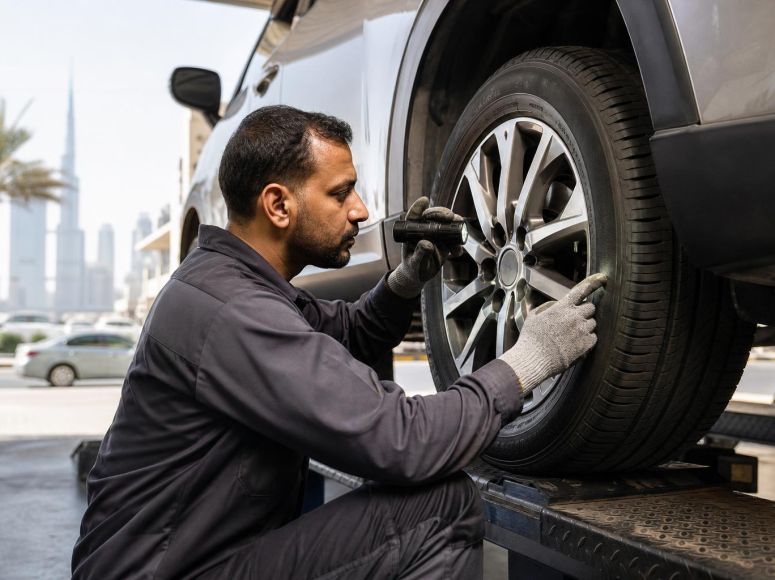
In Egypt and the GCC, tyres can look acceptable long after their rubber has begun to age. Intense sun, high road temperatures, long periods of outdoor parking and occasional low-use driving all accelerate the processes that reduce a tyre’s flexibility and strength. That makes tyre age just as important as tread depth.
Checking the date code is quick, costs nothing and is particularly valuable when buying a used car, fitting discounted tyres or preparing for a long highway journey. Here is how to interpret it and make a safer decision.
Why tyre age matters in hot climates
A tyre is a complex structure of rubber compounds, steel belts and fabric layers. Over time, oxygen, heat and sunlight slowly change the rubber. This ageing can reduce grip and contribute to cracking, separation or sudden failure, even if the tread has not worn down to its legal minimum.
Egyptian and Gulf conditions can be demanding because vehicles may spend hours outside in direct sun, sit in slow urban traffic with hot brakes and roads, or cover long motorway distances at sustained speed. Tyres on cars that are driven infrequently can also age poorly: they may have plenty of tread but have still been exposed to heat and weather for years.
Tread depth tells you how much rubber is left; the date code helps tell you how old that rubber is. Both checks matter.
How to find and read the tyre date code
Most modern tyres carry a four-digit date code at the end of the DOT or tyre identification marking on the sidewall. It may be on the side facing the suspension, so you may need to turn the steering wheel, look behind the tyre or ask a tyre shop to inspect it.
Reading the final four digits
- The first two digits are the week of manufacture.
- The final two digits are the year of manufacture.
For example, a code ending in 2324 means the tyre was made in the 23rd week of 2024. A code ending in 4819 means it was made in the 48th week of 2019.
Check every tyre, including the spare. A vehicle may have a mixture of tyre ages after individual replacements. The code identifies when the tyre was manufactured, not when it was fitted to the vehicle.
Do not judge a tyre by the date code alone
There is no universal replacement birthday that applies to every tyre in every climate and every vehicle. The vehicle manufacturer and tyre maker provide the most relevant guidance for the tyre and car concerned. Their recommendations should take priority, along with local legal requirements.
As a sensible ownership habit, have tyres professionally inspected more frequently once they reach several years of service, and be especially cautious with older tyres in Egypt and the Gulf. Many tyre and vehicle manufacturers advise an annual professional inspection from around five years of use and recommend that tyres should not remain in service beyond a maximum age specified by the manufacturer, often around ten years from manufacture. These are general industry practices, not a substitute for the instructions for your specific tyres.
Replace a tyre sooner if its condition, damage history or performance calls for it. A relatively new tyre can be unsafe after impact damage, chronic underinflation or severe overheating; an older-looking tyre should never be kept in service simply because its tread is deep.
Warning signs that call for immediate inspection
Do not wait for a routine service if you notice any of the following:
- Cracks or crazing: fine cracks in the sidewall, shoulder, tread grooves or around the valve area can indicate ageing or weather damage.
- Bulges, blisters or lumps: these may mean internal cord damage, often after a pothole or kerb impact. Do not drive at speed on a tyre with a bulge.
- Repeated pressure loss: a slow leak may be caused by a puncture, damaged valve, corroded wheel bead or tyre damage.
- Vibration or thumping: this can point to a damaged tyre, wheel, imbalance or uneven wear and needs diagnosis.
- Uneven tread wear: inner-edge wear, feathering, cupping or bald patches can indicate incorrect alignment, worn suspension parts or inflation problems.
- Exposed cords, cuts or deep sidewall damage: stop using the tyre and seek professional advice immediately.
Cracking can be hard to see on a dusty tyre. Wash the sidewall gently with water, let it dry and inspect it in good light. Avoid using petroleum-based dressings or harsh chemicals that can make condition harder to judge.
Age checks when buying used tyres or a used car
Used tyres may seem like a low-cost solution, but they require careful assessment in a hot region. A tyre with deep tread can still be old, poorly stored or internally damaged. If you cannot confirm its age and condition, it is not a sensible safety-critical purchase.
Before accepting used or discounted tyres
- Read the date code on each tyre yourself.
- Confirm the tyre size, load index and speed rating meet or exceed the vehicle manufacturer’s requirements.
- Inspect both sidewalls and the full tread for cracks, repairs, plugs, uneven wear and impact marks.
- Ask whether the tyre has been stored indoors, away from direct sunlight, heat sources, oils and moisture.
- Check that matching tyres on the same axle are the same size and ideally the same model and similar wear level.
- Have a reputable tyre specialist inspect it before fitting if there is any doubt.
When assessing a used vehicle, inspect the four fitted tyres and the spare. Different brands, radically different tread patterns or a wide spread of production dates may suggest piecemeal replacement or neglected maintenance. This does not automatically make the car unsuitable, but it should be reflected in the inspection and ownership budget.
Heat-smart tyre care for Egypt and the Gulf
You cannot stop tyres ageing, but good care reduces avoidable stress and improves safety.
Check pressures when tyres are cold
Use the cold-pressure specification on the vehicle placard, commonly found on the driver’s door frame, fuel flap or in the owner’s manual. Check pressures before a journey or after the car has been parked long enough for the tyres to cool. Do not reduce pressure simply because the reading rises after driving; pressure naturally increases as tyres warm up.
Underinflation is particularly harmful in high heat because it makes the tyre flex more and build up extra heat. Overinflation can reduce the contact patch and may worsen ride quality and uneven wear. Check all four tyres at least monthly and before long trips, then check the spare if your vehicle has one.
Protect tyres while parked
Shaded or covered parking reduces direct ultraviolet exposure and cabin heat, although it does not eliminate ageing. If outdoor parking is unavoidable, keeping the car clean, correctly inflated and moved regularly is helpful. Avoid parking with one tyre pressed hard against a sharp kerb, and take extra care after climbing kerbs or driving through deep potholes.
Rotate and align when required
Follow the rotation interval and pattern in the owner’s manual. Rotation can make wear more even, but it cannot repair age-related deterioration. Arrange a wheel-alignment check after a hard pothole strike, kerb impact, suspension repair or persistent uneven wear. Balanced wheels and correctly adjusted alignment help tyres run cooler and wear more predictably.
What about the spare tyre?
A spare often receives the least attention and may be the oldest tyre on the vehicle. It is still a tyre made of ageing materials, even if it has never touched the road. Check its date code, pressure, visible condition and fitment periodically.
If your car has a temporary-use spare, observe its speed and distance restrictions exactly. If it has a tyre repair kit rather than a spare, make sure the sealant is within its use-by date and that you understand the instructions before an emergency occurs.
When to replace tyres as a set
Ideally, fit matching tyres of the correct specification across an axle. Replacing all four at once can provide the most consistent handling, but it is not always necessary if the remaining tyres are in good condition and compatible.
When replacing only two tyres, follow the vehicle manufacturer’s recommendations and ask the fitter where the new pair should be installed. Many tyre makers commonly recommend fitting the newer pair to the rear axle to help maintain rear-axle stability on wet or slippery roads, but the vehicle handbook and professional advice for your specific car should guide the final decision. On all-wheel-drive vehicles, differences in rolling circumference can matter; consult the manufacturer before mixing significantly different tread depths.
A five-minute monthly tyre routine
- Check cold pressures against the vehicle placard.
- Look for nails, cuts, cracks, bulges and objects lodged in the tread.
- Compare tread wear across each tyre and from left to right.
- Check the tread-wear indicators and do not wait until the tyre is visibly bald.
- Look at the spare and confirm it is usable.
- Note any vibration, pulling or steering changes during the next drive.
Final word
For drivers in Egypt, Saudi Arabia, the UAE and the wider GCC, tyre age deserves a place beside pressure and tread depth in regular maintenance. Read the date code before buying, inspect tyres carefully for cracking and damage, and follow the recommendations in your vehicle and tyre manufacturer documentation. In a region where heat can be extreme, early inspection is always cheaper and safer than dealing with a high-speed tyre failure.