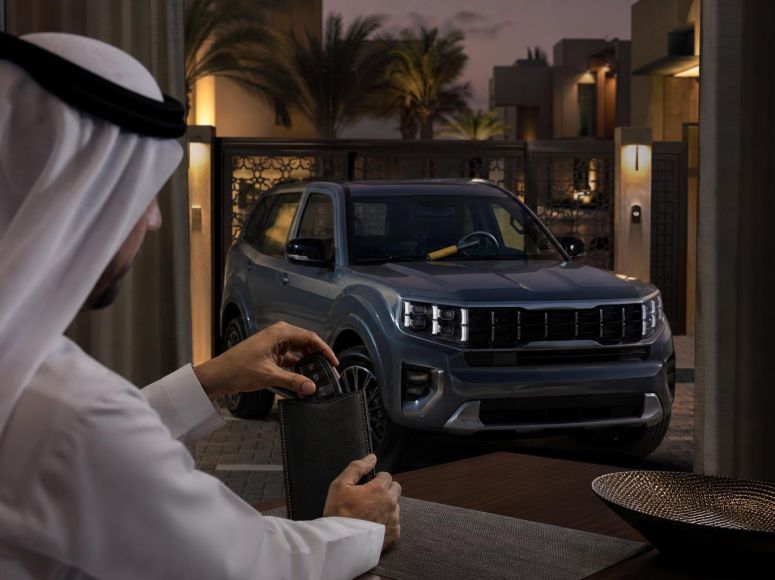
Keyless entry and push-button start are convenient in daily traffic, school runs and late-night parking, but they also change the way a vehicle can be targeted. For owners in Egypt, the Gulf and North Africa, cars may spend long hours outside homes, apartment buildings, workplaces or public car parks. That makes simple, repeatable security habits especially valuable.
There is no single anti-theft product that makes a car impossible to steal. The most effective approach is layered security: reduce the opportunity, make an attack harder and noisier, and improve the chance of a fast recovery if the vehicle is taken. The guidance below applies to many vehicles with passive keyless entry and push-button start, but always check your owner’s manual and ask an authorised dealer about features fitted to your specific vehicle.
Understand the main risk: keyless relay theft
Many passive keyless systems allow the car to unlock when the fob is nearby and start when the fob is inside the cabin. In a relay attack, criminals may use electronic equipment to extend the apparent range between a vehicle and a key left inside a nearby home, office or shop. The vehicle can then be fooled into believing its key is close enough to unlock or start.
This does not mean every keyless vehicle is equally vulnerable, and theft methods vary by vehicle design and location. However, it is sensible to treat an unattended key fob as part of the vehicle’s security perimeter.
Keep keys away from doors and windows
At home, do not leave a keyless fob on a console table, shoe cabinet or charging point next to the front door, garage door or ground-floor window. Move it farther into the property, ideally to an interior room. This simple step can reduce the chance that a signal can be reached from outside.
When travelling, avoid leaving the spare key in the vehicle, glovebox, luggage area or a magnetic key box. A spare key should be stored separately and securely.
Use a Faraday pouch or box correctly
A quality Faraday pouch or rigid signal-blocking box can help prevent a fob from communicating while stored inside. It is useful overnight and whenever the vehicle is parked near where the keys are kept.
- Put the fob fully inside and close the pouch or box properly.
- Stand next to the car with the protected fob and try the normal passive unlock function.
- If the car still unlocks, the pouch is not blocking adequately, is worn, or has not been closed correctly.
- Repeat the check occasionally, as pouches can deteriorate with everyday use.
Do not assume a metallic-looking bag, ordinary drawer or household safe will block radio signals. Test the specific product with your own car.
Use the security settings already in your car
Modern vehicles may have security and convenience settings that owners never explore. Depending on the make, model and market specification, these can include the ability to disable passive entry, alter automatic locking behaviour, activate an alarm, or use a fob sleep mode.
- Check the owner’s manual: Look for “passive entry,” “smart key,” “keyless entry,” “walk-away lock” or security settings.
- Ask the dealer or a qualified specialist: Ask whether passive entry can be disabled while retaining remote-button locking and push-button start. This is not available on every vehicle.
- Confirm every change: After changing a setting, test that you can still lock, unlock and start the car as expected.
- Keep software updates current: When your vehicle is serviced, ask whether there are relevant security or keyless-system updates for its VIN.
Never attempt unauthorised software changes or wiring modifications. Poorly installed accessories can create electrical faults, disable safety systems or affect warranty and insurance support.
Make the car harder to take
Electronic protection works best when paired with visible and physical deterrents. A thief looking for a quick, quiet theft often prefers the easiest available target.
Choose a proper parking routine
- Park in a well-lit, busy location where practical, especially overnight.
- At home, use a locked garage or gated space if available. If parking on a driveway, position the car where it is difficult to remove quickly without being noticed.
- In apartment parking, choose areas covered by building access control or cameras where possible. Do not rely on a camera alone; it may identify an incident but does not physically stop it.
- Do not leave windows partially open, even in hot weather, and confirm the sunroof and tailgate are shut.
- Before walking away, listen for the lock confirmation or physically check a door handle. Signal interference can sometimes prevent a remote-lock command from reaching a vehicle.
Add a visible steering-wheel lock
A robust, well-fitted steering-wheel lock is not outdated. It creates a highly visible delay and may encourage a criminal to move on. Choose one that fits your steering wheel securely and does not interfere with airbags or controls. It should complement—not replace—the factory immobiliser and alarm.
Consider a professionally installed immobiliser or tracker
For higher-risk vehicles or cars regularly parked outdoors, a reputable installer may be able to provide an additional immobiliser, tracking system or monitored alarm. Select equipment designed for your vehicle and installed by a qualified professional. Ask how it affects the vehicle battery, what happens if the subscription ends, where data is stored, and how recovery support works in your country.
Tracking can assist recovery, but it is not permission to confront anyone or attempt to recover a vehicle yourself. If a vehicle is stolen, involve the police and insurer immediately and follow their instructions.
Protect the diagnostic port and vehicle interior
On some vehicles, criminals may try to access electronic systems through the diagnostic port or by gaining entry to the cabin first. Exact risks and countermeasures are model-specific, so avoid generic modifications promoted online.
- Keep the cabin clear of valuables, access cards, documents and spare keys.
- Do not leave registration, insurance or ownership documents in the car unless local requirements make this unavoidable. Store copies securely and understand what your local authority and insurer require after a theft.
- If considering a diagnostic-port lock or other security hardware, use a vehicle-specific product and a trusted installer. It must not obstruct legitimate servicing or create wiring damage.
- Be cautious with used replacement keys and aftermarket remote-start systems. Have keys programmed, erased or replaced through a qualified provider when you buy a used vehicle.
Key control matters more than most owners think
Keep a record of how many keys exist for the car. When buying a used vehicle, ask for all supplied keys and have the vehicle assessed by an authorised dealer or qualified automotive locksmith. If a key is missing or its history is unclear, ask whether old keys can be removed from the vehicle’s memory and new keys programmed.
Never hand over keys to an unknown person outside a verified service, valet or parking process. Use established facilities, remove house keys and sensitive key tags from the vehicle keyring, and take a photo of the odometer and vehicle condition before leaving the car for extended work or storage.
Do not overlook heat, batteries and false alarms
Extreme summer heat across much of the GCC, Egypt and North Africa can shorten the life of a key-fob battery and a vehicle’s 12-volt battery. A weak fob battery is mainly a convenience issue, but it can cause inconsistent locking or make owners assume the car has secured when it has not.
Replace the fob battery with the correct type specified by the manufacturer, and test the remote functions afterward. If the alarm triggers repeatedly, doors do not lock consistently, or the car reports a keyless-system warning, arrange diagnosis rather than ignoring it. Do not disable an alarm permanently merely to stop nuisance alerts; the underlying fault may be repairable.
If you think someone has targeted your car
Take unusual activity seriously. Examples include unexplained lock problems, signs of tampering around a door or window, missing keys, or suspicious people repeatedly inspecting vehicles in the same area.
- Move the car to a safer, secure location if it is safe to do so.
- Check that every key is accounted for.
- Document visible damage with photographs and avoid disturbing possible evidence.
- Report suspicious activity or theft to the relevant local authorities.
- Contact your insurer promptly and follow its theft-reporting procedure.
- If a key has been lost or stolen, contact an authorised dealer or qualified locksmith to discuss reprogramming or deleting missing keys from the vehicle.
Conclusion
Keyless convenience does not have to mean accepting unnecessary risk. Store fobs away from external walls or in a tested Faraday pouch, confirm the car is locked, use secure parking habits and add appropriate physical or recovery measures for your circumstances. A few small routines can make a keyless vehicle a less attractive and more difficult target.