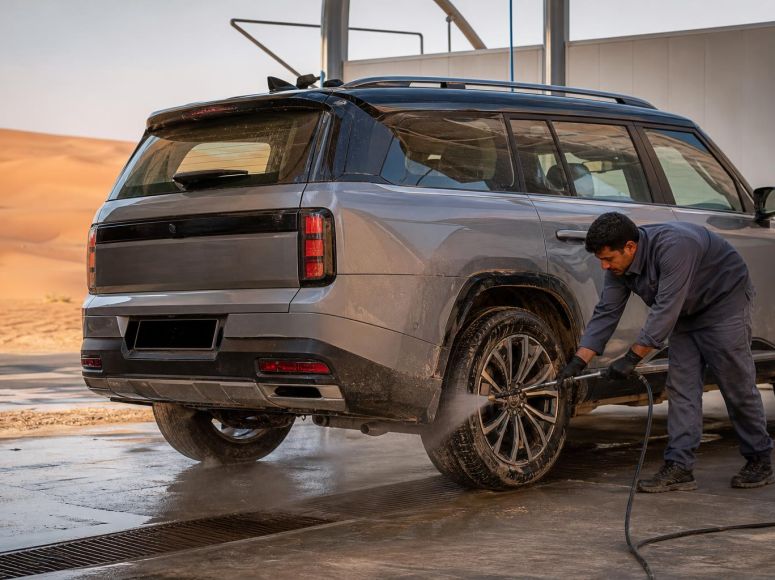
A desert track, dune drive or beach outing can be memorable—but the trip does not end when the car reaches tarmac. Fine sand works into places that are hard to see: wheel assemblies, brake shields, underbody covers, door seals and air-intake areas. In the Gulf, Egypt and other parts of North Africa, a quick post-drive inspection can prevent annoying noises, reduced air-conditioning performance and unnecessary wear.
This checklist is intended for ordinary road vehicles as well as SUVs that have been used on firm sand or proper off-road routes. If the vehicle was deeply bogged down, struck the underbody, drove through saltwater, or showed a warning light, arrange a professional inspection rather than relying on cleaning alone.
Why sand deserves attention after a desert or beach drive
Sand is abrasive. Coarse grains can become trapped around wheels and moving components, while very fine dust can block filters and settle inside the cabin. Heat makes the issue more noticeable: an already hard-working engine cooling system and air conditioner may have less margin if airflow through filters is restricted.
Beach driving needs extra care. Saltwater and wet sand can accelerate corrosion if they remain on metal components, suspension parts and electrical connectors. Desert sand is usually less corrosive, but it can still pack into undertrays, wheels and seals.
Start with a safe visual walk-around
Park on level ground, allow hot components to cool, and walk around the vehicle before washing it. A torch is useful for checking wheel arches and underneath the bumpers.
- Look for hanging panels: Check the engine undertray, wheel-arch liners, bumper lower trim and mud flaps. Sand ridges and contact with uneven ground can pull clips loose.
- Inspect the tires: Look for cuts, sidewall damage, embedded stones and unusual bulges. If you lowered tire pressures for sand driving, reinflate them to the vehicle manufacturer’s normal road-going recommendation before sustained highway driving.
- Check the wheels: Sand packed around the inner wheel rim can contribute to vibration. Also look through the wheel spokes for heavy sand accumulation around brake discs and shields.
- Check lights and number plates: Remove sand that obscures lamps, reflectors, cameras, sensors or the registration plate.
- Look underneath: Without crawling under an unsupported vehicle, look for fresh scrapes, fluid drips, loose heat shields or displaced protective covers.
Clean the exterior and underbody carefully
Rinsing promptly is generally better than allowing sand and, especially, salt residue to sit for days. Use a gentle, broad flow of clean water first to loosen material. Avoid aiming a very close, high-pressure jet directly at wheel-bearing seals, electrical connectors, camera lenses, door seals, underbody insulation or damaged plastic panels.
Priority areas to rinse
- Wheel arches, suspension arms and behind the wheels
- Brake-disc and brake-shield areas, using a moderate rinse rather than aggressive pressure
- Underbody covers, skid plates and bumper lower sections
- Radiator and air-conditioning condenser area from the front, gently
- Door sills, tailgate openings, window channels and rubber seals
- Roof rails, sunroof drains and the cowl area below the windscreen
If you drove on a beach or through shallow saltwater, request an underbody wash soon after the trip. It is sensible to tell the wash centre that the vehicle was used on a beach so they focus on the underside rather than only the painted bodywork.
Give the brakes time to clear and dry
Sand can create a light scraping sound around the brakes, particularly after driving in soft sand or after washing. On a safe, traffic-free road, drive gently and apply the brakes progressively a few times to help dry the discs and clear loose material.
Do not ignore persistent symptoms. A grinding noise, pulling under braking, steering-wheel shake, a soft brake pedal, burning smell or a brake warning light warrants prompt inspection. Do not attempt to dismantle brake components unless you are qualified and have the proper tools.
Check the engine air filter and cooling airflow
The engine air filter is a key line of defence against dust. Its service interval in the owner’s manual is a baseline, not a guarantee that it will remain clean after repeated dusty use. If the vehicle has driven in convoys, followed other cars closely on sand, or travelled through very dusty tracks, inspect the filter earlier.
Use the correct procedure for your vehicle. On many cars, the filter can be visually checked after opening the airbox; on others, access is less straightforward. Replace a heavily soiled, torn, damp or distorted filter with the correct specification. Avoid using compressed air on a paper filter unless the manufacturer specifically permits it, as this can damage the filter media or force dirt deeper into it.
Also inspect the front grille and visible face of the radiator and air-conditioning condenser for blocked airflow. Do not push tools through the delicate fins. If there is a thick layer of dust or seeds, a workshop can clean it safely.
Do not forget the cabin air filter and air conditioning
A dusty cabin, weaker airflow from the vents, musty smells or windows that mist more easily can point to a loaded cabin air filter. In MENA summers, the cabin filter matters because the air conditioner is often used continuously and must move large volumes of air.
Follow the vehicle’s maintenance schedule, but consider an earlier inspection after frequent desert trips. Choose a filter that meets the vehicle specification and ensure its cover is refitted correctly. A poorly seated filter cover can allow unfiltered dust into the HVAC system.
Clean the cabin without spreading grit
Sand under floor mats can grind into carpet and seat rails. Remove mats carefully, shake them away from the vehicle, then vacuum the carpets, seat tracks, boot and door pockets. Use a soft brush attachment around switches and vents; avoid forcing compressed air into dashboard gaps, where it can push dust deeper into electronics and trim.
Wipe door seals with a damp microfiber cloth and inspect them for tears or areas that have pulled away. Clean seals help doors close properly and reduce wind noise and dust entry.
Electronic aids, cameras and recovery points
Many modern vehicles use sensors and cameras for parking assistance, adaptive safety systems and off-road displays. Clean lenses and radar or sensor covers only with products suitable for vehicle exterior surfaces and a soft cloth. Do not scrape grit across a camera lens.
If recovery equipment was used, inspect the designated recovery points, tow-eye cover and bumper trim for damage. A vehicle that was pulled out by an incorrect attachment point may need a professional check, even if it appears normal from the outside.
What to monitor over the next few days
A thorough rinse and inspection catches most issues, but some signs appear later. Pay attention to:
- New vibration at speed after tire pressures have been restored
- Repeated brake scraping, squealing or reduced braking confidence
- Engine warning lights, reduced power or unusual intake noise
- Air-conditioning airflow that remains weak after the cabin filter is checked
- Water leaks, wind noise or dust entering around doors, windows or the tailgate
- Fresh fluid leaks or rattles after an underbody impact
These symptoms are reasons to book a workshop visit. Mention that the car was driven in sand or on a beach; that context helps the technician inspect the most relevant areas first.
A simple routine protects the next journey
Desert driving does not automatically harm a well-prepared vehicle, but it does call for a different aftercare routine than city driving. Restore road tire pressures, rinse sand from the underbody and wheel areas, check filters and listen carefully on the next drive. For beach use, make corrosion prevention the priority. These small steps help keep brakes, cooling, air conditioning and cabin seals ready for the hot, dusty conditions many MENA drivers face year-round.