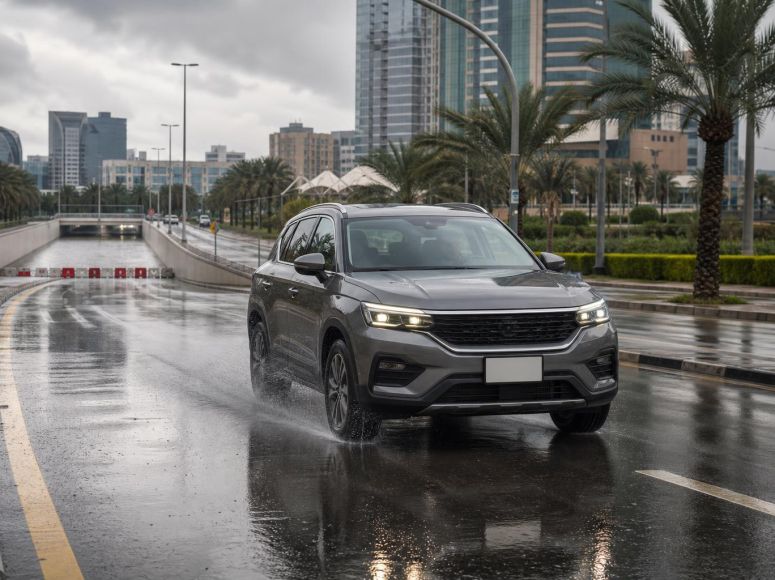
In Egypt and across the Gulf, rain may be infrequent, but that does not make it harmless. A short, intense downpour can quickly create low visibility, slick road surfaces and deep standing water—particularly on urban underpasses, service roads, desert highways and routes near wadis. Drivers who are used to dry conditions may underestimate how rapidly grip and visibility can disappear.
The safest approach is simple: slow down early, increase your space, avoid flooded sections wherever possible and never treat a water crossing as a test of the vehicle’s capability. This guide explains how to prepare, drive and respond safely when rain arrives unexpectedly.
Why the first rain can be especially slippery
On roads that have been dry for long periods, oil residue, fuel drips, tyre rubber, dust and fine sand can build up on the surface. Light rain mixes with this contamination before it has washed away, creating a particularly slippery film. Painted lane markings, metal drain covers, bridge joints and polished paving can become even more slippery.
Do not assume a road is safe just because rain is light. The first minutes of rainfall can be a high-risk period, especially at junctions, roundabouts and motorway entry ramps where braking and turning loads are greatest.
Prepare the car before wet weather arrives
A few routine checks can make a major difference when conditions change. These checks matter even more in hot, dusty climates, where rubber and wiper components can deteriorate quickly.
- Tyres: Check pressures when the tyres are cold and inspect tread across the full width. Uneven wear, cracks, bulges or shallow tread reduce wet grip and increase the chance of aquaplaning. Follow the tyre-pressure label or owner’s manual rather than guessing.
- Wipers: Replace blades that smear, skip, split or leave streaks. Dust can scratch and harden wiper rubber; clean the windscreen and blade edges with a suitable cleaner.
- Windscreen washer fluid: Keep the reservoir topped up. Muddy spray from other vehicles can obscure the screen quickly.
- Lights: Check low-beam headlights, tail-lights, brake lights and indicators. Being visible to following traffic is as important as seeing ahead.
- Demisting: Make sure the air conditioning and ventilation controls can clear mist from the windscreen. Air conditioning helps remove moisture from cabin air, even when the weather is cool.
- Brakes and battery: If a warning light is on, braking feels abnormal, or the battery is weak, arrange inspection before relying on the car in poor weather.
Before setting off: make a route decision, not just a driving decision
When heavy rain is expected or already falling, the best safety action may be delaying a non-essential journey. Check official weather and road advisories in your country, and allow extra time. Avoid routes known for low-lying underpasses, poor drainage, coastal pooling or wadi crossings.
Do not rely solely on a navigation app to judge whether a road is passable. Conditions can change faster than map data updates. If authorities close a road or place barriers across it, turn around and choose another route. Never move barriers or follow another driver through a closure.
How to drive when roads become wet
Reduce speed smoothly and early
Speed that feels comfortable on a dry motorway may be unsafe in rain. Reduce it before bends, exits and standing water—not once the car has started to lose grip. Brake, steer and accelerate progressively. Sudden inputs can overwhelm the tyres’ available grip.
Increase the following gap
Leave substantially more space than you would on a dry road. Rain reduces tyre grip and visibility, while spray can hide brake lights and road hazards. A larger gap also lets you slow gradually instead of braking sharply.
Use appropriate lights
Use dipped headlights in rain, dust-laden rain or poor visibility, even during daylight. This helps other road users see your vehicle. Avoid high beams in heavy rain or mist: reflected light can reduce your own visibility. Do not drive with hazard warning lights continuously simply because it is raining; use them when your vehicle is an actual temporary hazard, such as being stopped or moving unusually slowly, in accordance with local rules.
Keep both hands on the wheel
Puddles, ruts and flowing water can tug at the steering. Hold the wheel securely and avoid using cruise control when roads are wet or conditions are variable, so you can respond immediately by easing off the accelerator.
Aquaplaning: what it is and what to do
Aquaplaning, also called hydroplaning, happens when a layer of water prevents the tyre tread from maintaining proper contact with the road. The steering can feel light or vague, the car may stop responding normally, and you may hear a sudden change in tyre noise.
It can occur at speeds lower than many drivers expect when water is deep, tyres are worn, pressures are incorrect or the road surface has grooves and ruts.
- Stay calm and look where you want to go. Keep the steering wheel as straight as practical.
- Ease off the accelerator gently. Do not abruptly lift off or stamp on the brakes.
- Avoid sudden steering, braking or acceleration. Let the tyres regain contact as the vehicle slows.
- Once grip returns, slow down further. There may be more standing water ahead.
If the vehicle has electronic stability control, keep it switched on unless the vehicle manufacturer specifically instructs otherwise for a particular off-road situation. These systems can assist with loss of control, but they cannot create grip where the tyres are riding on water.
Never guess the depth of floodwater
Floodwater is one of the most serious road hazards during storms in the region. Water can hide potholes, open drains, damaged asphalt, curbs, debris and flowing channels. Its depth is difficult to judge, particularly at night. Even a road that looks familiar may have changed beneath the water.
The safest rule is: do not drive into floodwater if you cannot clearly confirm the route and depth are safe. Turn around and find a higher, open route. This is especially important near wadis and low-lying crossings, where water can rise or flow strongly with little warning.
A high-riding SUV is not a guarantee of safety. Air intakes, electrical components, wheel bearings and cabin seals vary by vehicle, and moving water can undermine traction or push a vehicle off line. Four-wheel drive improves propulsion in some conditions; it does not make floodwater predictable or safe.
If you unexpectedly enter water
If it is safe to continue and the water is clearly shallow, maintain a very slow, steady pace and avoid stopping. Do not create a bow wave that could force water into the engine bay or affect other road users. Keep a generous distance from vehicles ahead.
Once clear, test the brakes gently at low speed, when it is safe to do so, to help dry the braking surfaces and confirm normal response. If the engine runs roughly, warning lights appear, braking feels unusual, steering becomes heavy, or water has entered the cabin, stop in a safe place and arrange professional assistance. Do not restart an engine that has stalled in water; attempting to restart it can cause severe internal damage if water has entered the engine.
If your vehicle becomes stranded
Your priority is personal safety, not saving the vehicle. If water is rising or flowing around the car, leave only if you can reach a clearly safe, higher location without entering moving water. Do not wade into fast-flowing water. Call local emergency services or roadside assistance as appropriate, and follow instructions from authorities.
If you are stopped in a safe location away from rising water, keep your seat belt fastened until you have assessed the surroundings. Make the vehicle visible where safe to do so, and avoid standing near live traffic in poor visibility.
After driving through heavy rain
A quick post-rain check can identify problems before they become dangerous or expensive.
- Check that brakes feel normal and that no warning lights remain on.
- Inspect tyres for cuts, sidewall damage and objects picked up from flooded roads.
- Remove leaves, sand and debris from around the windscreen scuttle area and visible drainage channels.
- Look for water under floor mats or in the boot. Damp carpets can lead to mould, corrosion and electrical issues.
- Listen for unusual noises from brakes, wheel bearings or belts.
- Wash mud, salt residue and debris from the underside when practical, especially after coastal flooding or dirty standing water.
If water reached the cabin, engine bay or electrical connectors, a workshop inspection is sensible even if the vehicle appears to drive normally. Water damage may not be immediately obvious.
Common mistakes to avoid
- Following the vehicle ahead into water without assessing the route yourself.
- Speeding through puddles, which can trigger aquaplaning and conceal road damage.
- Assuming an SUV, pickup or 4x4 can safely cross any flooded road.
- Using worn tyres because they still feel acceptable in dry weather.
- Braking hard after a sudden loss of grip.
- Driving around official road closures or through barriers.
- Restarting a vehicle that stalled in water.
Conclusion
Rain in Egypt and the Gulf deserves the same respect as more familiar regional hazards such as heat, dust and sand. A well-maintained car, lower speed, larger following gap and a willingness to turn back from floodwater will prevent many dangerous situations. When visibility is poor or the road surface is uncertain, arriving later is always the better outcome than taking a risk that cannot be undone.