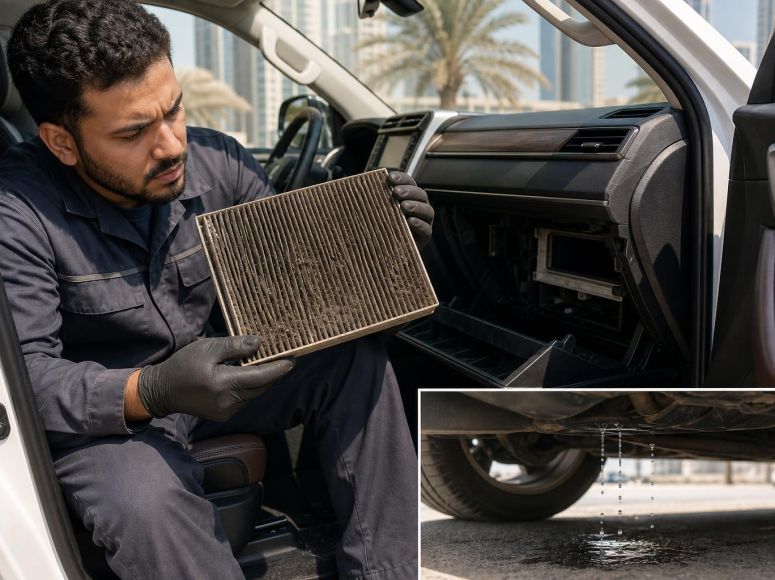
In Egypt, the Gulf and much of North Africa, a car’s air conditioning runs hard for a large part of the year. That makes problems such as a musty smell, reduced airflow, water on the passenger-side carpet or dripping inside the cabin especially frustrating. These symptoms are often linked not to a lack of refrigerant, but to the cabin air filter, the evaporator and the condensate drain.
The good news is that some checks are simple. The important part is knowing what is normal, what needs prompt attention and which repairs should be left to a qualified AC technician.
First: what is normal AC water drainage?
When the AC is cooling, moisture in the cabin air condenses on the cold evaporator inside the dashboard. That water should flow through a small drain tube and drip harmlessly under the vehicle.
A small puddle of clear water beneath a parked car after using the AC is usually normal. It is commonly seen around the front passenger-side area, although the exact location varies by vehicle. It is not proof of a coolant leak or an AC fault.
Water inside the vehicle is different. Damp carpets, water around the front footwells, repeated window fogging or a sloshing sound from behind the dashboard can point to a blocked or displaced evaporator drain. Do not ignore it: trapped moisture can create odours, corrode electrical connectors and encourage mould growth.
Why these problems are common in MENA conditions
High heat makes drivers run the AC at high output, while dust, sand and urban pollution load the intake system. In coastal cities such as Jeddah, Dubai, Abu Dhabi, Doha, Kuwait City, Alexandria, Casablanca and Tunis, humid air also creates more condensate for the drain to handle. Short journeys can add to the problem because moisture may remain around the evaporator instead of drying fully.
Common contributors include:
- A dirty cabin air filter: Dust restricts airflow and can hold moisture and odours.
- Debris at the fresh-air intake: Leaves, fine dust and other debris can enter through the cowl area at the base of the windscreen.
- A contaminated evaporator: Moisture and airborne material on the evaporator can create a stale or sour smell.
- A blocked condensate drain: Sludge or debris prevents water from leaving the HVAC housing.
- A water leak unrelated to the AC: A damaged door seal, windscreen seal, sunroof drain or body seam may also wet the cabin. This needs to be distinguished from an AC drain fault.
Match the symptom to the likely cause
Musty, damp or “old sock” smell when the AC starts
This often indicates microbial growth or accumulated dirt on the evaporator, a damp cabin filter, or both. The smell may be strongest for the first minute after start-up and then fade. A new filter alone may improve airflow but will not always remove an odour if the evaporator remains contaminated.
Weak airflow from the vents
Start with the cabin filter. In dusty environments it can become restricted well before a generic service interval. A blocked filter can make a working AC system feel weak, particularly at low blower speeds. Also check that vents are open and that the blower speed changes normally. If airflow remains poor with a clean filter, the blower motor, blower resistor, mode doors or evaporator may need diagnosis.
Water on the front passenger carpet
A blocked evaporator drain is a leading possibility, especially if the wetness appears after extended AC use. However, do not assume. Check whether the water is clear and odourless, and whether it occurs only after AC operation. A technician should inspect the drain route and rule out rainwater entry or a heater-coolant leak.
Windows fog up unusually easily
AC normally helps dehumidify cabin air. Persistent fogging can result from wet carpets, a saturated filter, recirculation being used constantly, or an HVAC fault. If the windscreen develops a greasy film or there is a sweet smell, have the cooling system checked promptly: coolant entering the cabin through a heater-core leak is less common, but requires repair.
Little or no water drips under the car on a humid day
This is not conclusive by itself. The amount of condensation varies with humidity, temperature and how long the AC has operated. But if there is no external drip and water is appearing inside, a restricted drain is likely and should be inspected.
A safe owner checklist
- Inspect the cabin air filter. Consult the owner’s manual for its location and replacement procedure. Many are behind the glovebox, but access differs by model. Replace it with the correct size and orientation; the airflow arrow must point the right way.
- Look for dampness. Feel the carpet and under-mat area in both front footwells. Check after a normal AC journey, not immediately after washing the car or driving in rain.
- Check for clear drainage outside. After a drive with the AC operating, look under the parked vehicle. Never crawl beneath an unsupported car or reach near hot exhaust components.
- Clear visible intake debris only. With the vehicle switched off, remove loose leaves and debris from the exterior cowl area near the windscreen. Avoid pushing objects into intake openings.
- Use fresh-air mode periodically. Recirculation is helpful in extreme heat, dust and traffic, but using fresh-air mode when outside conditions allow can reduce the feeling of stale cabin air. Switch back to recirculation when dust, fumes or high heat make it appropriate.
- Dry the cabin if it is wet. Remove mats, dry affected areas thoroughly and do not leave wet carpets sealed up in the heat. Persistent moisture needs a proper source diagnosis.
What not to do
- Do not poke wire, compressed air nozzles or rigid tools into an AC drain tube. You can detach the tube, damage the HVAC housing or force debris further inside.
- Do not use strong household cleaners through dashboard vents. They may damage interior materials, leave harmful fumes or fail to reach the evaporator.
- Do not add refrigerant because of a smell or water leak. Refrigerant charge does not cause musty odours, and an incorrect charge can reduce cooling performance.
- Do not mask a smell with fragrance. Air fresheners may hide the symptom temporarily but do not solve contamination or trapped water.
When to book an AC service
Arrange a workshop inspection if there is water inside the cabin, a persistent smell after replacing the filter, weak airflow with a clean filter, repeated fogging, or poor cooling. Ask the workshop to inspect the cabin filter, blower operation, evaporator condition, evaporator drain and the surrounding HVAC housing. If cleaning is needed, it should be carried out with products and procedures suitable for the vehicle’s climate-control system.
A competent technician can also distinguish an AC drain issue from water entering through body seals or from a coolant leak. This matters because the repairs are very different.
Prevention for hot and dusty climates
There is no universal cabin-filter replacement interval that suits every driver in MENA. Follow the vehicle manufacturer’s maintenance guidance, but inspect earlier if you regularly drive through dust, park outdoors, use unpaved roads or notice reduced airflow. During routine servicing, ask for the filter condition to be shown to you rather than replacing it blindly.
Keep the cowl area clear, avoid leaving wet floor mats in the cabin, and address any water ingress quickly. Before parking for a long period, it can also help to run the fan for a short time with cooling switched off, where practical, to reduce residual moisture on the evaporator. This is a supporting habit, not a cure for an existing blockage or odour.
The bottom line
Clear water dripping under a car with the AC on is generally normal. Musty odours, wet carpets and weak airflow are not. In the region’s heat, dust and humidity, a timely cabin-filter inspection and professional evaporator-drain check can protect comfort, visibility and the vehicle’s interior from a small problem becoming an expensive one.